T wave alternans لینک

http://www.wikidoc.org/index.php/T_wave_alternans

برای دیدن مطلب کامل در مورد T wave alternans بر روی لینک فوق کلیک کنید

T-wave alternans is a beat-to-beat alternation in the repolarization cycle of the heartbeat. It can be observed in the electrocardiogram (ECG) as a difference in the amplitude and morphology of the ST-segment and/or the T wave among successive odd and even beats in an ABAB pattern (Figure).

سیگنال اوریج SAECG

سیگنال اوریج SAECG

در قسمت الکتروفیزیولوژی برای اندازه گیری ventricular late potential  به کار میرود.امواج  late potential  به اندازه 1-25   میکروولت و در صورت وجود در انتهای  کمپلکس  QRS  وجود دارند.و برای تشخیص بیمارانی که در معرض  خطر تاکیکاردی بطنی خود به خود متعاقب انفارکتوس میوکارد و یا بروز SVT بر اثر تحریک الکتریکی ،مفید است. دستگاه سیگنال اوریج در حقیقت این امواج را تقویت،ثبت  و مقایسه کرده سیگنال های ناشی از پارازیت را حذف کرده و معیار ها را بیان میکند مقادیر نرمال اندازه گیری در ذیل آمده است

HFLA: high frequency,low amplitude<39

QRS duration: male< 114       female<120

RMSO4: root mean square>20

 پروسیجر غیر تهاجمی است و مراحل ان مانند گرفتن نوار قلب است. مدت ان 20  دقیقه است و در طی این مدت بیمار بر روی تخت خوابیده است .محل قرار گیری الکترود ها در برخی از دستگاه ها با نوار قلب متفاوت است و در سینه، گردن و پشت قفسه سینه قرار میگیرد.آمادگی خاصی قبل از انجام لازم نیست. بهترکه سینه بیماران تمیز و شیو شده باشد .سیگنال اوریج در بیمارانی که ریتم انها  PVC  زیاد دارد و بیمارانی که پیس دارند قابل قبول نیست.سایر کاربرد های سیگنال اوریج در متن انگلیسی ذکر شده است که در صورت علاقه مطالعه شود.

What is a signal-averaged electrocardiogram

Signal-Average Electrocardiogram

(Signal-Averaged ECG, Signal-Averaged EKG, SAECG)

Procedure Overview

What is a signal-averaged electrocardiogram?

An electrocardiogram (ECG or EKG) is one of the simplest and fastest procedures used to evaluate the heart. Electrodes (small, plastic patches) are placed at certain locations on the chest, arms, and legs. When the electrodes are connected to an ECG machine by lead wires, the electrical activity of the heart is measured, interpreted, and printed out for the physician's information and further interpretation.

A signal-averaged electrocardiogram is a more detailed type of ECG. During this procedure, multiple ECG tracings are obtained over a period of approximately 20 minutes in order to capture abnormal heartbeats which may occur only intermittently. A computer captures all the electrical signals from the heart and averages them to provide the physician more detail regarding how the heart’s electrical conduction system is working.

Signal-averaged ECG is one of several procedures used to assess the potential for dysrhythmias/arrhythmias (irregular heart rhythms) in certain medical situations.

Other related procedures that may be used to assess the heart include resting electrocardiogram (ECG), Holter monitor, exercise electrocardiogram (ECG), cardiac catheterization, chest x-ray, computed tomography (CT scan) of the chest, echocardiography, electrophysiological studies, magnetic resonance imaging (MRI) of the heart, myocardial perfusion scans, radionuclide angiography, and ultrafast CT scan. Please see these procedures for additional information.

The heart's electrical conduction system:

The heart is, in the simplest terms, a pump made up of muscle tissue. Like all pumps, the heart requires a source of energy in order to function. The heart's pumping action comes from an intrinsic electrical conduction system.

Illustration of the electrical system of the heart

An electrical stimulus is generated by the sinus node (also called the sinoatrial node, or SA node), which is a small mass of specialized tissue located in the right atrium (right upper chamber) of the heart.

The sinus node generates an electrical stimulus regularly at 60 to 100 times per minute under normal conditions. This electrical stimulus travels down through the conduction pathways (similar to the way electricity flows through power lines from the power plant to your house) and causes the heart's lower chambers to contract and pump out blood. The right and left atria (the two upper chambers of the heart) are stimulated first and contract a short period of time before the right and left ventricles (the two lower chambers of the heart).

The electrical impulse travels from the sinus node to the atrioventricular (AV) node, where impulses are slowed down for a very short period, then continues down the conduction pathway via the “bundle of His” into the ventricles. The “bundle of His” divides into right and left pathways to provide electrical stimulation to both ventricles.

This electrical activity of the heart is measured by an electrocardiogram. By placing electrodes at specific locations on the body (chest, arms, and legs), a graphic representation, or tracing, of the electrical activity can be obtained. Changes in an EKG from the normal tracing can indicate one or more of several heart-related conditions.

Reasons for the Procedure

Reasons your physician may request a signal-averaged ECG may include, but are not limited to, the following:

  • to determine the cause of chest pain
  • to evaluate other signs and symptoms which may be heart-related, such as fatigue, shortness of breath, dizziness, or fainting
  • to help identify irregular heartbeats
  • for further evaluation of dysrhythmias/arrhythmias noted on resting ECG

There may be other reasons for your physician to recommend a signal-averaged ECG.

Risks of the Procedure

A signal-averaged ECG is a quick, noninvasive method of assessing the heart’s function. Risks associated with ECG are minimal and rare.

Prolonged application of the adhesive electrode patches may cause tissue breakdown or skin irritation at the application site.

There may be other risks depending upon your specific medical condition. Be sure to discuss any concerns with your physician prior to the procedure.

Certain factors or conditions may interfere with or affect the results of the test. These include, but are not limited to, the following:

  • obesity, pregnancy, or ascites (accumulation of fluid in the abdomen)
  • anatomical considerations such as the size of the chest and the location of the heart within the chest
  • movement during the procedure
  • exercise, intake of high-carbohydrate meal, and/or smoking prior to the procedure
  • certain medications
  • electrolyte abnormalities, such as too much or too little potassium, magnesium, and/or calcium in the blood

Before the Procedure

  • Your physician or the technician will explain the procedure to you and offer you the opportunity to ask any questions that you might have about the procedure.
  • Generally, fasting is not required before the test.
  • Notify your physician of all medications (prescribed and over-the-counter) and herbal supplements that you are taking.
  • Notify your physician if you have a pacemaker.
  • The area(s) where the electrodes are to be placed may be shaved.
  • Based upon your medical condition, your physician may request other specific preparation.

During the Procedure

A signal-averaged ECG may be performed on an outpatient basis or as part of your stay in a hospital. Procedures may vary depending on your condition and your physician’s practices.

Generally, a signal-averaged ECG follows this process:

  1. You will be asked to remove any jewelry or other objects that may interfere with the procedure.
  2. You will be asked to remove clothing from the waist up. The technician will ensure your privacy by covering you with a sheet or gown and exposing only the necessary skin.
  3. You will lie flat on a table or bed for the procedure. It will be important for you to lie still and not talk during the procedure, so as not to interfere with the tracing.
  4. If your chest is very hairy, the technician may shave small patches of hair, as needed, so that the electrodes will stick closely to the skin.
  5. Electrodes will be attached to your chest, abdomen, and back.
  6. The lead wires will be attached to the skin electrodes.
  7. Once the leads are attached, the technician may key in identifying information about you into the machine's computer.
  8. The EKG will be started. Generally, it will take about 20 minutes to obtain the necessary ECG information.
  9. Once the tracing is completed, the technician will disconnect the leads and remove the skin electrodes.

After the Procedure

You should be able to resume your normal diet and activities, unless your physician instructs you differently.

Generally, there is no special care following a signal-averaged ECG.

Notify your physician if you develop any signs or symptoms you had prior to the test (e.g., chest pain, shortness of breath, dizziness, or fainting).

Your physician may give you additional or alternate instructions after the procedure, depending on your particular situation.

مکان های مسیر فرعی سندرم ولف پارکینسون وایت(متن فارسی)

اختلال الکتروکاردیوگرافی سندرم Wolf Parkinson White (WPW زمانی به وجود می آید که تحریک دهلیزی تمام یا قسمتی از بطن ها یا تحریک بطنی، تمام یا قسمتی از دهلیز را زودتر از زمانی فعال کند که از انتقال تحریک از مسیر هدایتی تخصیص یافته طبیعی انتظار می رود. این فعال شدن زودرس به وسیله ارتباطات عضلانی ایجاد می شود که در حقیقت فیبرهای میوکاردی هستند که در خارج از بافت هدایتی تخصیص یافته قرار دارند و مسیرهای فرعی نامیده می شوند. به این اختلال زمانی سندرم تلقی می شود که به علت وجود مسیر فرعی، تاکی آریتمی ایجاد گرد

بروز سندرم ولف پارکینسون وایت تا 3 در هزار هم گزارش شده است. اغلب افراد مبتلا به سندرم WPW قلب سالم دارند و بروز تاکی آریتمی ها می تواند حیات آ نها را به خطر اندازد و حتی احتمال وقوع مرگ ناگهانی با فرکانس تخمینی 1/0% وجود دارد. تعدد تاکی کاردهای حمله ای با افزایش سن بیشتر می شود.


در زمینه انتخاب درمان، درمانهای دارویی آنتی آریتمیک از زمانهای قدیم برای سندرم WPW وجود داشته و هر چند با موفقیت هایی همراه بوده، اما کاملاً مطلوب نبوده است. با مصرف این داروها کاهش در بروز مرگ ناگهانی قابل پیش بینی نبوده و در مصرف کوتاه مدت و درازمدت، عوارض متعددی ایجاد می گردد. امروزه برای بررسی تشخیص و درمان آریتمی ها بررسی الکتروفیزیولوژیک قلب (EPS) Electro Physiologic Study و استفاده از انرژی رادیوفرکونسی، نقش عمده ای پیدا نموده است. در مطالعات انجام شده، (Radiofrequency Catheter Ablation) RFCA زمانی که توسط الکتروفیزیولوژیست های بالینی ماهر انجام گردیده، بسیار بی خطر و نتایج عالی به همراه داشته است اثربخشی، بی خطری و به صرفه بودن این روش درمانی، آن را به درمان انتخابی تبدیل کرده است

بیماران ممکن است علایمی چون طپش قلب،درد قفسه سینه، سنکوپ،SCD  را تجربه نمایند

در الکتروکاردیوگرام شاهد وجود  PR interval  کوتاه – موج دلتا – افزلیش اندازه  QRS  هستیم.

تاکی کاردی در WPW به دو صورت ارتودرومیک( طرح  LBBB  ) و یا انتی درومیک ( طرح  RBBB ) در  V1 است.

در تعیین محل WPW الکتروکاردیوگرام هم می تواند کمک کننده و هم گمراه کننده باشد . معمولا در انهایی که دلتای کوچک دارند مسیر فرعی در سمت چپ  ودر دلتاهای بزرگ مسیر فرعی در سمت راست است ( این یک اصل کلی نیست).هنگامی که دلتا هست  HV کوتاه تر میشود.

 راهنمای مکان های مسیر فرعی:

Right free wall: دلتای مثبت در لید  I and avL به همراه  LEFT axis

Right antroseptal : دلتای مثبت در لید II – III  -avF

Left Free Wall : دلتای منفی در لید avL – I – V5 –V6   

Typical Right Postroseptal : دلتای ایزوالکتریک در  avF – III – II  و  وجود  rS در  V1  - وجود  Rs در  V2

نسبت  این دو موج در V1 –V2  تغییر میکند.(

.( transient zone

Right Postro Septal: دلتای منفی در لید II – III – avF


Wolff-Parkinson-White 2

WPW Syndrome stands for Wolff-Parkinson-White Syndrome. It is also called as Ventricular pre-excitation with arrhythmia. WPW syndrome is the most common type of ventricular pre-excitation syndromes. In normal conditions, the electrical signals in the heart move through the heart using a single path. It is as a result of the movement of electrical signals from the heart’s atria to the ventricles, the heart beat is caused. Therefore for the heart to beat properly, the timing of the electrical signals play a vital role. But in case of people with Wolff-Parkinson-White syndrome, as they are born with an extra connection in the heart, called an accessory pathway which allows electrical signals to go around the atrioventricular node and move from the atria to the ventricles faster than usual, this results in the arrival of the electrical signals to the ventricle sooner than it actually should. This condition is called the WPW syndrome. 

The WPW Syndrome comes under the category of heart’s electrical abnormality called the pre-excitation syndrome. It is usually recognized by the changes seen in the electrocardiogram. An electrocardiogram (ECG) is a graphical record that shows the heart’s electrical activity


WPW syndrome is categorized into two types depending on the ECG findings. They are the type A and the type B. Let us have a brief discussion on each one of them.


Type A

In this type of WPW syndrome, the delta wave and QRS complex are predominantly straight in the precordial leads. The dominant R wave in lead V1 may be misinterpreted as right bundle branch block.


Type B

The delta wave and QRS complex are predominantly negative in leads V1 and V2 and positive in the other precordial leads, resembling left bundle branch block.


Symptoms

There are cases wherein some people have WPW syndrome but do not know they have it because they do not experience any symptoms while there are cases where the patients may experience several symptoms. The common symptoms are:

Dizziness

Rapid heart beat

Shortness of breath

Chest palpitations        

Fainting

Cardiac arrest 

Causes

Wolff-Parkinson-White syndrome affects 1 in 1,000 people globally.  In most of the cases, the cause of WPW syndrome is unknown. However, there are cases which show a relation between the genes and the WPW syndrome though only a small percentage of WPW syndrome cases are said to run in families. 


Complications 

There are  very few complications of Wolff-Parkinson-White (WPW) syndrome. However, complications of WPW syndrome can occur at any age. But people who are born with an accessory pathway in the heart will never experience any serious health problems associated with the condition.


Diagnosis and Treatment

The diagnosis of WPW Syndorme is usually done using the electrocardiogram. Treatment of WPW syndrome depends on how severe the symptoms are. It also depends on the type of WPW syndrome the person is suffering from. Most of the time, the asymptomatic patients, that is the patients who are not troubled by symptoms, usually do not need any treatment. However, even though treatment is not necessary, it is very much important to be evaluated on a regular basis by the doctor.


WPW Syndrome

wpw syndrome
shows the heart’s electrical activity.

The ECG on the top shows normal sinus rhythm and the ECG at the bottom shows Wolff-Parkinson-White Syndrome.
normal sinus rhythm ecg
wpw syndrome ecg
Types of WPW Syndrome
 
 catheter ablation in wpw white syndrome
 

لینک کتابخانه الکتروکاردیوگرام

لینکی که در ذیل برایتان قرار داده ام بسیار جالب است و در واقع کتابخانه نوار قلب است .شما میتوانید نمونه الکتروکاردیوگرام های بیماران مراکز مختلف با دسته بندی تمامی اریتمی ها را انتخاب و مشاهده بفرمایید. امیدوارم برایتان مفید باشد .متاسفانه قرار دادن ان در وبلاگ با کیفیت بالا امکان پذیر نبود.لطفا بر روی لینک کلیک کنید.

http://www.ecglibrary.com/ecghome.html

left lateral  wpw     

Wolf-Parkinson-White syndrome


Wolf-Parkinson-White syndrome

  • short PR interval, less than 3 small squares (120 ms)
  • slurred upstroke to the QRS indicating pre-excitation (delta wave)
  • broad QRS
  • secondary ST and T wave changes

Localising the accessory pathway

An accessory pathway, bundle of Kent, exists between atria and ventricles and causes early depolarisation of the ventricle. The location of the pathway may be deduced as follows:-

  LOCATION                   V1   V2   QRS axis

left posteroseptal (type A)  +ve  +ve  left

right lateral      (type B)  -ve  -ve  left

left lateral       (type C)  +ve  +ve  inferior (90 degrees)

right posteroseptal          -ve  -ve  left

anteroseptal                 -ve  -ve  normal


لینک های Basics of Pacemaker Timing

Basics of Pacemaker Timing

:برای دیدن  موضوع به صورت پی دی اف  بر روی لینک دوم و به صورت اموزش ویدیویی بر روی لینک  اول کلیک کنید        

https://wwwp.medtronic.com/medtronicconnect/contentpacemaker-timing-01.html

http://www.cardiorhythm.com/2009/pdf/19/76.pdf

لینک بسیار مفید برای  یادگیری مکانیسم اریتمی ها

لینکی که در زیر مشاهده مکنید اریتمی های مختلف را به صورت انیمیشن قلب و همین طور نوار قلب نشان میدهد .برای مشاهده بر روی لینک ذیل کلیک نمایید

http://www.biosensewebster.com/patientEducation/av-nodal-reentrant-tachycardia.aspx

PJRT ECG 2

Note the regular, narrow complex tachycardia throughout. 

PJRT ECG

 shows an ECG from a 29-year patient with PJRT. The tachycardia was an incidental finding on a routine ECG and the patient was asymptomatic. The tachycardia is described as a long RP tachycardia (see below). The p wave looks different to sinus rhythm – it is typically inverted in the inferior leads (II, III and aVF) - indicating atrial activation from “low to high” (the opposite direction to sinus rhythm). The p-R interval is typically relatively normal 
PJRT

PJRT

characterized by a long RP′ interval

شبیه AVNRT  است اما به علت هدایت اهسته رتروگرد از راه فرعی تاکیکاردی اهسته است.

در ECG

1-موج  P منفی در لیدهای تحتانی وجود دارد.

2-سیگنال V با حالت تاخیری نسبت به  سیگنال  A  می اید.

3-مکان ابلیشن ناحیه پوستروسپتال است.

4-اولین A اریتمی در CS9-1O دیده میشود.

5-تفاوت ان باAVNRT  ان است که از FAST  رد نمیشود.

Permanent junctional reciprocating tachycardia (PJRT)

Permanent junctional reciprocating tachycardia (PJRT) is a rare form of nearly incessant supraventricular tachycardia occurring predominantly in infants and children and characterized by a long RP′ interval and, in the typical form, by negative P-waves in leads II, III, and aVF on the surface ECG. During sinus rhythm, the surface ECG is normal, without manifest pre-excitation. PJRT is caused by an atrioventricular (AV) re-entry using the AV node as the antegrade limb and a slowly conducting accessory pathway (AP) as the retrograde limb. The location of the AP is commonly right posteroseptal with an atrial insertion close to the ostium of the coronary sinus, but other locations have been reported. Chronic uncontrolled tachycardia has been reported to result in tachycardia-induced cardiomyopathy (TIC), which usually recovers with adequate ventricular rate control As PJRT is most of the time refractory to drug therapy, radiofrequency catheter ablation of the AP has become the treatment of first choice.

برای دیدن متن انگلیسی و اطلاعات بیشتر بر روی لینک ذیل کلیک کنید

www.inspire.com/conditions/permanent-junctional-reciprocating-tachycardia-pjrt

انواع AVNRT و درمان ان

انواع AVNRT

1-ATYPICAL AVNRT(SLOW-SLOW

در الکتروکاردیوگرام موج P در لیدهای تحتانی منفی است./ در لید های V1-V2-avR- avL  موج P مثبت است./ SHORT PR  است.

2-ATYPICAL AVNRT ( FAST-SLOW

LONG PR /موج  P در لید های تحتانی منفی / موج P  در لید های avL- avR مثبت است.

3- ATYPICAL  AVNRT( SLOW-FAST 

SHORT VA-LONG AV /P  قابل مشاهده وجود ندارد یا در  QRS پنهان شده و یا کاملا بعد از  QRS  میاید/

SUDO( S  در لید های تحتانی II,III, avF   / در V1  SUDO R/  ریتم منظم دارد.

درمان AVNRT

تحریک واگ ، ماساژ کاروتید، مانور والسالوا، مانور مالف  باعث

 کاهش سرعت اریتمی و یا قطع ان میشود.در صورت عدم

پاسخ آدنوزین اولین داروی انتخابی است. آدنوزین هدایت

رتروگرد را کند میکند و به صورت 12-6 میلی گرم تزریق سریع

میشود. در بیماران تعویض قلب و یا کسانی که دیپیریدامول

میگیرند 3 میلیگرم تزریق میشود..اگر آدنوزین جواب نداد شوک

سینکرونایز 10-50 ژول داده میشود. درمان ابلیشن :به طور

معمول با ابلیشن  SLOW PATHWAY  انجام میشوددر نوع ATYPICAL  میتوان  FASTPATHWAY  را ابلیت کرد که به علت

عوارض بالا انجام نمیشود.

سیگنال ابلیشن

بر روی کاتتر ابلیشن باید هر دو سیگنال  A/V را داشته باشیم از

عدم وجود سیگنال  HIS  اطمینان حاصل کنید. ابلیشن در ناحیه

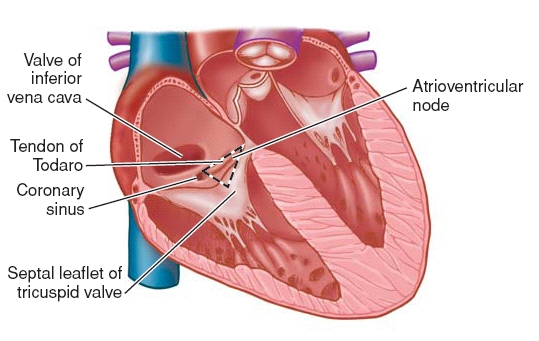
 SLOW PATH WAY  انجام میشود که به صورت اناتومیکی از

مثلث کخ که در شکل زیر نشان داده شده است استفاده

میشود .استفاده از نمای RAO  متداول تر است اما در برخی

مراکز از نمای  LAO  استفاده میشود.به خاطر داشته باشید که

راس مثلث مکان  HIS  و قاعده ان مکان  CS OS  است.نسبت ا

ندازه موج A/V بهتر است 3/1 باشد.همچنین در ابلیشن

 AVNRT  میتوان از سیگنال AP potential  که به صورت

دفلکشن کوچکی میان a/v  میاید نیز بهره برد. در حین ارسال

رادیو فرکانس در صورت ایجاد بلوک VA یا AV  ویا طولانی شدن

 PR  و یا ACCELERATED JUNCTIONAL RHYTHM  ارسال

امواج رادیوفرکانس را به سرعت قطع کنید. بهترین حالت ابلیشن

زمانی است که به تناوب ریتم جانکشن و سینوسی داشته

باشیم.

ایزوپرل

در هنگام مطالعه الکتروفیزیولوژی برای ایجاد اریتمی و افزایش

ریت بیمار طبق دستور پزشک  از ایزوپرل به صورت انفوژیون

آهسته و یا اتروپین استفاده میکنیم بالا رفتن ریت تا 20% ریت

پایه مناسب است.در هنگام دادن ایزوپرل به سرعت ریت و فشار

خون بیمار توجه کنید.بیمار ممکن است حالت هایی چون

گرگرفتگی،تنگی نفس،طپش قلب را تجربه نماید که در این صور

ت ایزوپرل و سایر سرم های دریافتی بیمار که باعث ورود دارو به

خط وریدی بیمار میشود را قطع کنید.نیمه عمر ایزوپرل کوتاه

بوده و بعد از چند دقیقه اثر ان از بین میرود.


اناتومی مثلث کخ

تاکی کاردی reentrant گره AV

تاکی کاردی reentrant گره AV

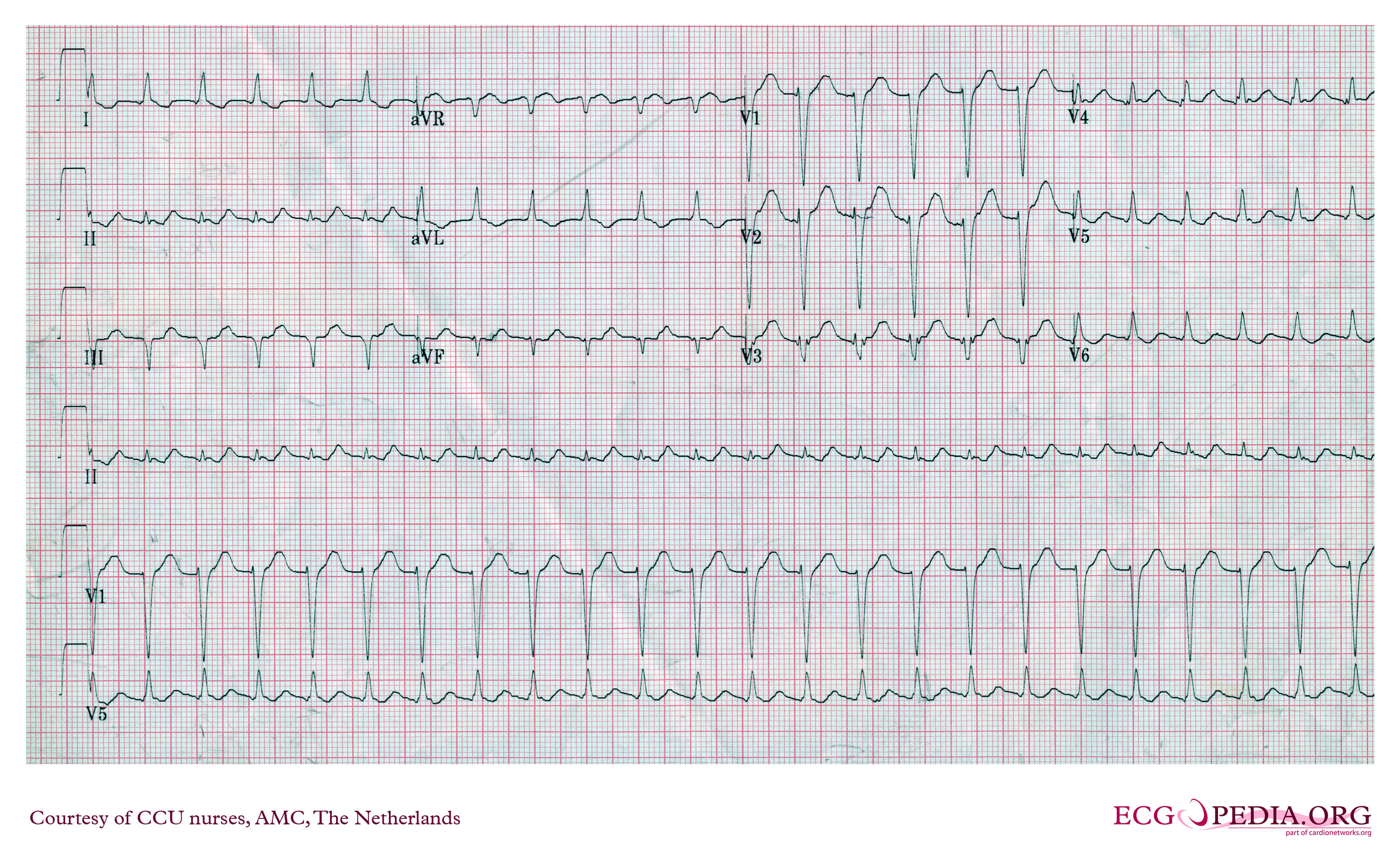
شایع ترین علت از تاکی کاردی فوق بطنی پروگزیمال AVNRT

 است. AVNRT است در  50-60% از بیمارانی که  QRS tachyarrhythmia منظم باریک داشته اند تشخیص داده شده

است . ضربان قلب  بین120-250  و کاملا منظم است که به طور

معمول  AVNRT ممکن است در افراد سالم جوان, و زنان رخ

می دهد. اغلب بیماران بیماری های قلبی ساختاری ندارد. اما,

گاهی اوقات این افراد ممکن است یک بیماری قلبی زمینه ای

مانند بیماری روماتیسمی قلب, پریکاردیت, انفارکتوس میوکارد,

پرولاپس دریچه میترال, یا سندرم preexcitation  داشته باشند

درتاکی کاردی دهلیزی گره reentrant. معمولابا محور طبیعی
 
 قلبی و امواج شبه S در II, III, و AVF. همچنین شبه R ’ امواج
 
 در V1 و AVR.دیده میشود این سیگنال ه نشان دهنده فعالیت
 
 رتروگراد دهلیزی می باشند.

درک الکتروفیزیولوژی بافت گره AV بسیار مهم است به منظور

درک مکانیسم AVNRTباید گفت که. در بیشتر افراد, گره AV

دارای یک مسیر هدایتی است که تحریکات را به

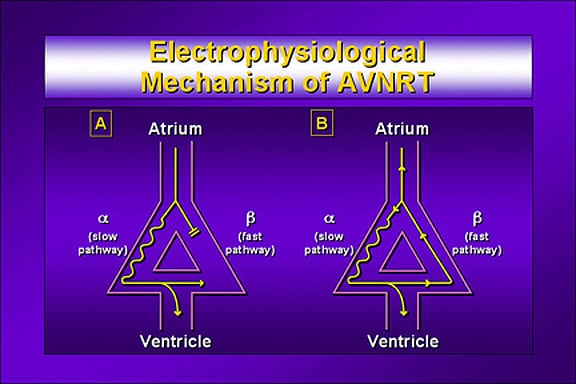
صورت  anterogradeهدایت مینماید.. در موارد خاص, بافت گره AV ممکن است 2 مسیر رسانا با خواص مختلف

الکتروفیزیولوژیک داشته  داشته باشد. یک مسیر (آلفا) مسیر

نسبتا آرام  با یک دوره کوتاه تحریک ناپذیری است, در حالی که

مسیر دوم : (بتا) مسیر سریع با یک دوره طولانی تحریک

ناپذیری است.عملکرد  اشتراکی این مسیرهای مختلف  به

عنوان راه فرعی برای تاکی کاردی reentrant عمل میکند.

شروع AVNRT با ضربه زودرس دهلیزی میباشد

150072 156670 3015 300x221 Paroxysmal Supraventricular Tachycardia
 

مهم, توجه داشته باشید که در AVNRT بطن ها به عنوان

بخشی از مدار  ورود مجدد درگیر نیستد;  از آنجا که این ضربه به

طور معمول در شیوه ای anterograde از طریق مسیر آهسته و

در صورت رتروگراد انجام از طریق مسیر سریعصورت میگیرد. 

فاصله PR طولانی تر از فاصله RP.است  بنابراین, در بیماران

مبتلا به AVNRT معمولی, موج P معمولا در انتهایی کمپلکس

 QRS قرار دارد. در بیماران مبتلا به AVNRT آتیپیک, هدایت

 anterograde از طریق مسیر سریع و هدایت رتروگراد از طریق

مسیر آهسته انجام میشود. بنابراین در بیماران آتیپیک, فاصله

 RP طولانی تر از فاصله   PR.است

محل ابلیشن AVNRT


Figure 3.  Schema of the AV node with radiofrequency energy delivered via an ablation catheter, typically at the site of the slow pathway to eradicate the circuit that initiates and perpetuates AVNRT.

-

AV nodal reentrant tachycardia (AVNRT)

SVT | AVNRT

Figure 1

figure 3

SVT | AVNRT

  SVT | AVNRT

Another example of AV nodal re-entry tachycardia

File:ECG000012.jpg

AV Nodal Re-entry Tachycardia (AVNRT) or Atrial-

Ventricular Nodal Re-entry Tachycardia is a supra-

ventricular arrhythmia. It is, more precisely, a nodal

arrhythmia. AVNRT is the most frequently occurring form

of regular tachycardia. More females than males have

signs of AVNRT. The ratio is approximately 3:1. Often

patients present themselves with a fast-paced heart

rate (they say their heart is racing). An AVNRT can be

reversed by vagal stimulation (squat, massage of the

Carotid sinuses), medication (adenosine, verapamil,

diltiazem), or electrocardioversion. An AVNRT is a

regular rhythm with a rate of 180-250 /min. An AVNRT

appears to have a re-entry with a circuit in and around

the AV node. A condition for AVNRT to occur is that 2

electric pathways occur in and around the AV node (a

slow paced and a fast paced pathway). That gives way

to the ccurrence of re-entry.

Two forms of ANVRT occur: typical and atypical ANVRT

 How does an ANVRT show up on an ECG?

AVNRT is characterised by a smaller second R-wave (R’).

This second R-wave looks similar to a Right Bundle

Branch Block, but the QRS is < 120ms. The RP distance

is < 100ms: the distance between the R-wave and the P-

top is below 100ms. An AV Nodal Re-entry Tachycardia

(AVNRT) is a rapid tachycardia with a typical rate

around 200 bpm. The tachycardia origin is the AV node.

A prerequisite for AVNRT is a slow and fast pathway in

the AV node, most often caused by degradation of the

AV nodular tissue. The dual pathways facilitate re-entry.

Two sensitive characteristics to identify AVNRT on the

ECG are:

۱-R'. This is a small secondary R wave. It resembles a

right bundle branch block, but the QRS width stays < 120ms.

۲-RP << 100ms. The distance between the R and P

waves is less than 100ms.

Re-entry as seen in AVNRT

Short  QT Syndrom

Short  QT Syndrom

بیماری ژنتیکی است و این افراد معمولا  normal heart  هستند.

مشخصات  ECG:

1-فقدان وجود قطعه ST

2-موج T  بلند و PEAKED

3-کوتاه بودن QT INTERVAL

4-QT<300-320  ms  

این بیماران مستعد AF –AFL  هستند.

علایم شامل PALPITATIONS  و SYNCOPE  است

تغییرات در کانال های پتاسیم به علت متاسیون  ژن های KCH2است

معمولا سابقهSCD در فامیل وجود دارد

در EPS  دارای Short  A/V refractory  هستند و مرتب VF  میکنند.

درمان: تعبیه  ICD وادامه درمان با کینیدین است زیرا action potentiel  را طولانی میکند و بعد از تعبیه ICD برای کاهش تعداد شوک به کار میرود.

تشخیص های افتراقی  کلی در اریتمی ها ی الکتروفیزیولوژیک قلبی

تشخیص های افتراقی  کلی در اریتمی ها ی الکتروفیزیولوژیک قلبی

1-    Long  RP/short PR

الف-Atypical AVNRT

ب- ATRIAL TACHYCARDIA

ج-PJRT

د-SRNT

2-Short RP/long  PR

الف-TYPICAL AVNRT

ب-AVRT

3-Very short VA کمتر از 90 m.s

Typical AVNRT


4-AV Dissociations

الف-ventricular tachycardia

ب-CHB


5-NEGATIVE HV

الف-Vent.tachycardia

ب- انتی درومیک AVRT


6-Bundle branch reentry

Vent.tachycardia with positive HV


7-Decremental conduction pacing

کاهش HV و افزایش  AH  به همراه LBBB

الف- ماهایم

8-relatively narrow QRS

Left septal VT 


نحوه تفسیر اینترا کاردیاک کاردیوگرام

نحوه تفسیر اینترا کاردیاک کاردیوگرام

1-ابتدا به  Surface ECG  نگاه کنید

2- به سرعت تراسه  دقت نمایید.

3-میران  HR rate  را محاسبه نمایید. HR=CL/60,000

4-مشخص کنید که ریت طبیعی قلب است یا حاصل پیس کردن است و اگر

 ناشی از پیس است منشا ان کجاست؟دهلیز؟ بطن؟ ابلیشن؟....

5- به سیگنال  RA ( right atrium)  و RV(righr ventricular ) نگاه کرده و

رابطه میان ان دو را بررسی نمایید.

6-به سیگنال HIS نگاه کرده و مشخص کنید ایا سیگنال هیس در اریتمی

شرکت دارد یا خیر؟

DFT ( DEFIBRILATION THRESHOULD TEST


DFT ( DEFIBRILATION THRESHOULD TEST

سنجش میزان انرژی لازم برای برطرف کردن VF  است. مقدار انرژی که باعث

درمان و برطرف شدن VF میشود را Dose response  نامیده میشود.

Safty margin:میزان انرژی برای درمان VF  در ICD PROGRAMMING  را 10

ژول بالاتر از میزان به دست امده از چک DFT  قرار میدهند.

فاکتورهای موثر در میزان DFT

میزان EF-وجود  LV MASS- کلاس  CHF-  ایسکمی- جنس- سن – حجم

سطح بدن –کاردیومیوپاتی-داروها ،امیودارون باعث بالا رفتن میزان DFT  

میشود.در صورتی که بیماری به علت ریتم AF  تجویز شود در صورت بروز VF

ممکن است میزان شوک کافی نبوده و قادر به درمان  نباشد. سوتالول باعث

کاهش DFT  میشود.

در هنگام چک DFT میتوان VF  را به سه طریق ایجاد کرد

1-NIPS:Non invasive programmed stimulation

2-Eps: به دو طریق اعمال میشود  الف-low energy shock on T wave

ب-High  frequency ventricular burst pacing   

3-ventricular extra stimulation: با کاتتری که در groin  گذاشته شده ا

ست ایجاد میشود.(این روش تقریبا منسوخ شده است ).

هنگام VF induction  بیمار باید  sedate  بوده و دستگاه دفیبریلاسیون

خارجی اماده باشد.